Posts

Lars Shrike Walks the Night
A spaceman on a strange planet.
Somewhere in a distant galaxy… the protagonist of what looks like a 1970s era science fiction film wanders around the empty desert of a prison planet. He is desperate to escape but, suffering from amnesia, he must first work out who he is. Is he the product of a failed space experiment, a clone, or something worse?
Lars Shrike Walks the Night is Stranger Than Fiction meets K-PAX. The story explores the strange relationship between writers’ and their characters. The film examines reality, identity, and existence.
The ‘what is the nature of reality?’ question echoes films like Vanilla Sky, The Truman Show, Fight Club, Total Recall and Shutter Island. Although Lars Shrike Walks the Night is a very different kind of story, and with a very different budget, the protagonists of these stories ask the same two philosophical questions. Who am I? What is ‘real’ in my life?
So, who is Lars Shrike?
Kelsey Grammer plays Lars Shrike in this low budget science fiction film written and directed by Gary Walkow. I was expecting a classic redemptive story – a homeless amnesiac rediscovers his previous life. But, Lars Shrike Walks the Night takes a slightly different angle and does it with subversive humour.
Backrooms
A nowhere life leads to a nowhere place.
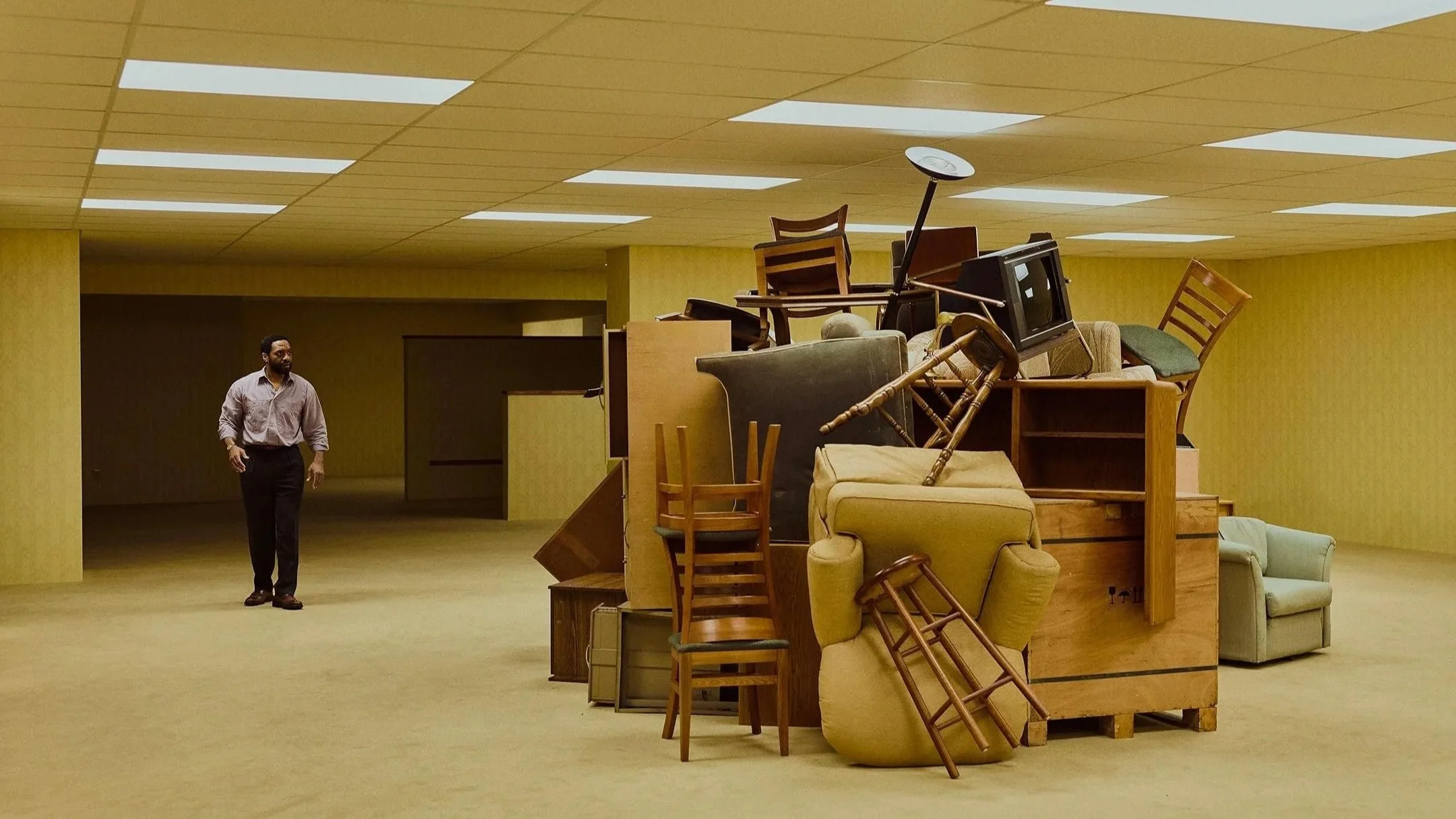
Backrooms (2026) is a psychological horror. The film is directed by Kane Parsons, who previously worked on YouTube shorts. He has faithfully adapted his YouTube ‘backrooms’ videos for cinema.
In Backrooms, Clark’s big dream is to be a successful architect, but his ambitions have led to failure, alcoholism, and the collapse of his long term relationship. Now he lives in the furniture store that he manages. When he discovers a portal to another world he takes a journey into a strange land. The journey (like Kurtz in Heart of Darkness) accelerates his mental decline.
The story takes place in 1990, in an analogue, pre-internet world. It uses the ‘liminal spaces’ YouTube meme, which is a kind of distorted parallel reality. This world is accessed through an invisible portal in a wall, in the basement of his furniture store.
What are the backrooms? The environment is a place of creepy surreal horror, a metaphor rather than a space for absolute science fiction. It’s more Alice’s Adventures in Wonderland than 2001. Visually, it’s part computer game glitch, part Freudian psycho-geography, and part abandoned space. There are echoes of the zone in Stalker and the area in Annihilation. ‘Found footage’ and effective sound design enhance the atmosphere.
What is the story? Clark’s nowhere life leads him to the discovery of the backrooms – a nowhere place. The backrooms are a classic nightmare experience, a labyrinth with a monster, or a haunted house with ghosts. This strange place is a test of his resilience and a visual metaphor for Clark’s mental disintegration or ‘miss-rememberings’.
The film picks up in the last twenty minutes with a mind blowing MC Escher moment and a monster that’s both frightening and comical. It’s a slow build story. The pace may alienate some people, but it pays off in the end.
Obsession
Be careful what you wish for.
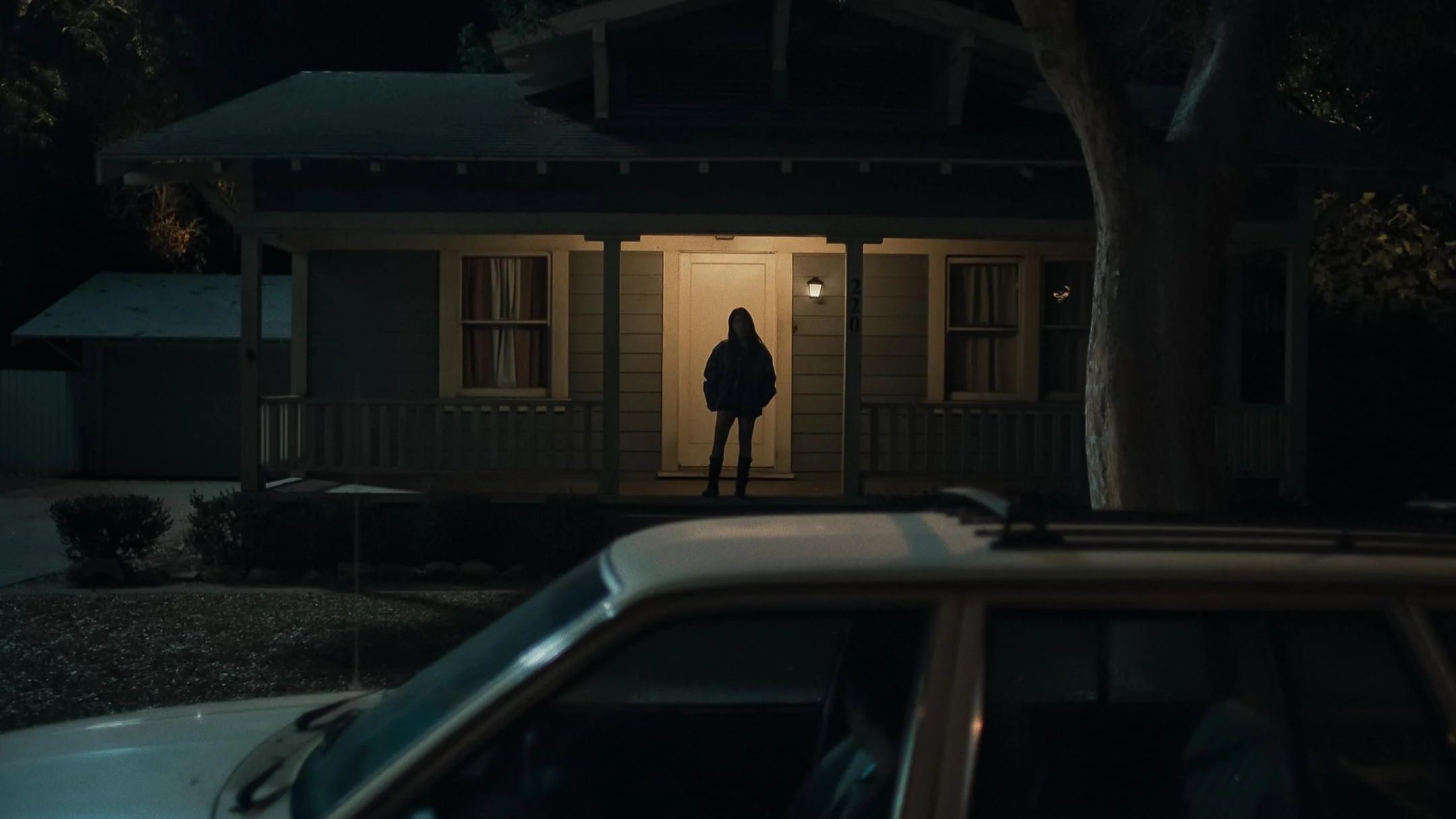
With a reputed budget of $750,000, Obsession has already taken $374 million at the box office. 2026 has seen two films – Obsession and Backrooms – provide an antidote to mainstream Hollywood’s big budget superhero ‘IP’ movies. Years of Disco eventually produced the backlash of Punk. Could years of the special effects dominated superhero moviez produce a return to the low-budget indie flick? Maybe. Maybe not.
Obsession is a contemporary horror. It’s Eraserhead meets The Shining meets The Exorcist meets Midsommar with cringe-horror moments and the magical premise of Big. Stylistically it’s dark, literally a dark aesthetic of shadows and silhouettes often with a deep focus.
When the weak protagonist makes a wish for his crush to love him more than anyone else in the world, her love becomes extreme, toxic, and violent. She turns into a deranged psychopath. The moral of the story is clear – be careful what you wish for.
The film moves through a series of tonally different modes. Normality mode (indie movie romcom), creepy mode (psychological horror), and violent confrontation mode (shock horror). Each mode is spliced together with a deliberately jarring jump-cut. Each one also provides a heightening of the tension followed by a reset at the start of the next section – the protagonist forgives his girlfriend and they makeup. It’s a partial reversion to normality.
In the first of these mode switches, the protagonist goes from almost instant infatuation with his crush (indie movie romcom mode) to immediately backing off from her (psychological horror mode). This poses questions about believability, but every time you question the story, the pace pushes ahead, producing some genuinely scary, shock horror frights.
The Expansion Project
The workplace as a metaphor for life.
We’ve all been to The Expansion Project, an ordinary day in the office when you feel like you’re not really there. Maybe you aren’t?
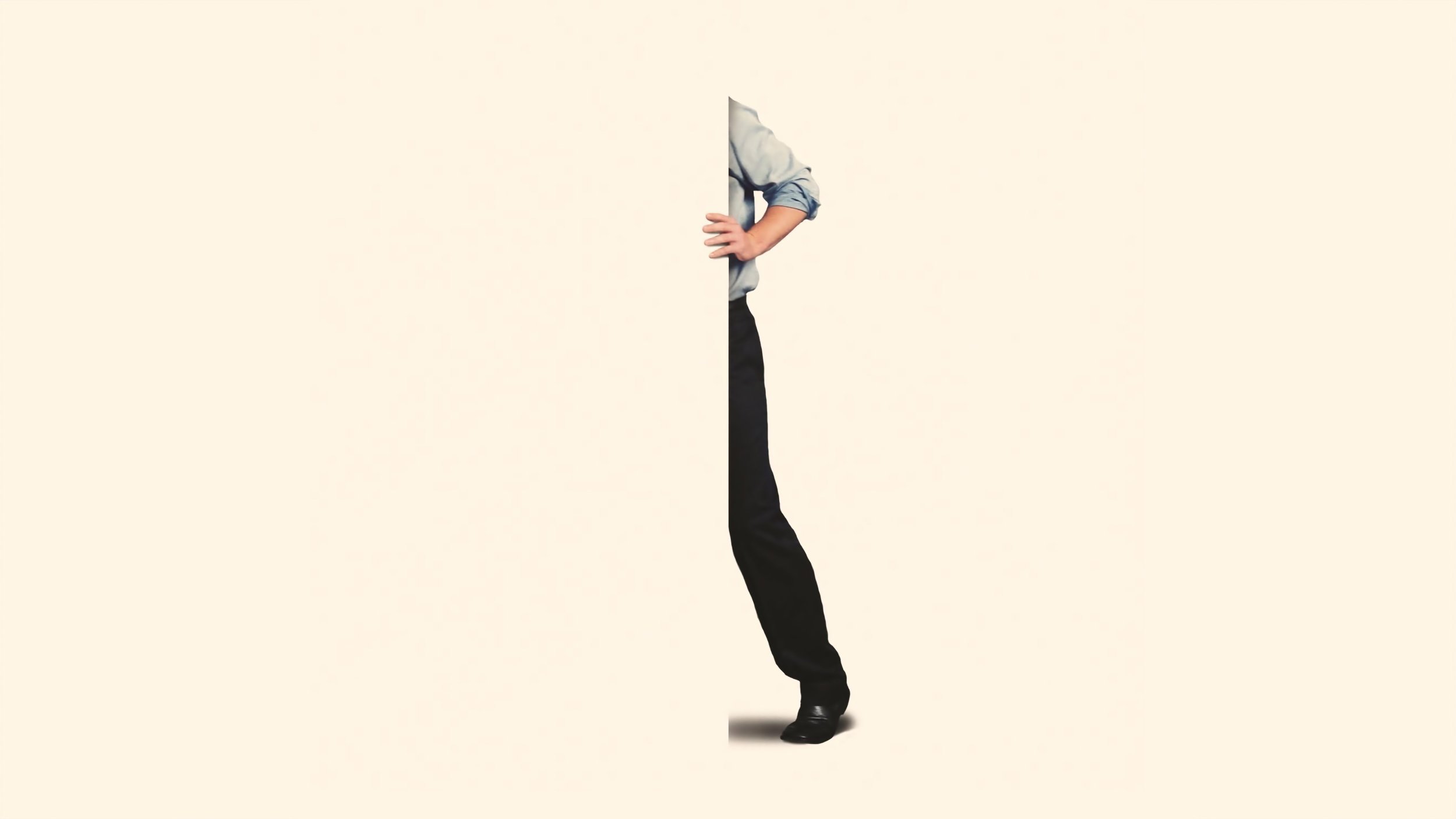
The Expansion Project is a literary science fiction novel by Ben Pester. It explores the unreality of the workplace as a metaphor for life. It’s David Graber’s Bullshit Jobs expressed as a work of fiction. The workplace as a simulation of a Philip K Dick novel. A liminal space from Backrooms or Exit 8. It’s the alien world of Annihilation. The ‘zone’ in Stalker. An experience. And a mystery.
Whatever The Expansion Project is… it’s a bizarre and surreal place that’s been archived at some point in the distant future. There is no satisfying explanation telling us what it’s all about. This is literary science fiction, after all, not genre fiction. So, it’s the experience of the narrative and the language that is the destination rather than a story arc with a conclusion to the journey.
Literary science fiction seems to be having something of a renaissance. Much like the death of the Western genre spawned literary Westerns like Blood Meridian – the current cryogenic stasis of the science fiction genre has seen the rise of literary science fiction novels like Klara and the Sun, Machines Like Me, The Second Sleep… and now The Expansion Project.

Exit 8
An endlessly looping subway corridor.
Genki Kawamura’s film Exit 8 (2025) is a psychological horror about a man who is stuck in an endlessly looping subway corridor. It’s David Lynch meets The Shining meets M C Escher. The film is based on the computer game The Exit 8.
Exit 8 is a so-called ‘liminal space’ horror. The sub-genre has become a meme in 2026 with the release Backrooms. A liminal space is a place that people pass through on their way to somewhere else. These are typically anonymous corridors in public areas. They operate as ‘portals’ into another reality. They are psychologically charged and present the protagonist with a surreal, labyrinth-like puzzle to escape from. They may be an ordinary place, transformed by time, an empty school during the summer vacation, a hotel in the off-season, or a closed down shopping mall. The atmosphere is one of claustrophobia and being locked in. The space symbolically expresses the protagonist’s mind, their memories, and inner trauma.
The liminal space has been around for a long time – the creepy swimming pool in Cat People (1942), the bombed city at night in The Third Man (1949), the zone in Stalker (1979), the empty streets of Vivarium (2019), the weird purgatory world of Last Year at Marienbad (1961), episodes of Black Mirror, The Twilight Zone, and Severance, computer games like Silent Hill (1999) and, perhaps most famously, the hotel corridors of Kubrick’s The Shining. These places all share the same surreal and uncanny psychogeography.
Exit 8 fuses multiple horror sub-genres, from surrealism, to the ‘locked in’ story and the repeated loop story structure of films like Groundhog Day (1993). It uses horror to expresses an experience of modern life – the doom loop of endless scrolling, the personal isolation of noise cancelling headphones – the anxiety of feeling disconnected from the world around us, and from ourselves.
Widow’s Bay
Unexplained monsters afflict a small community.
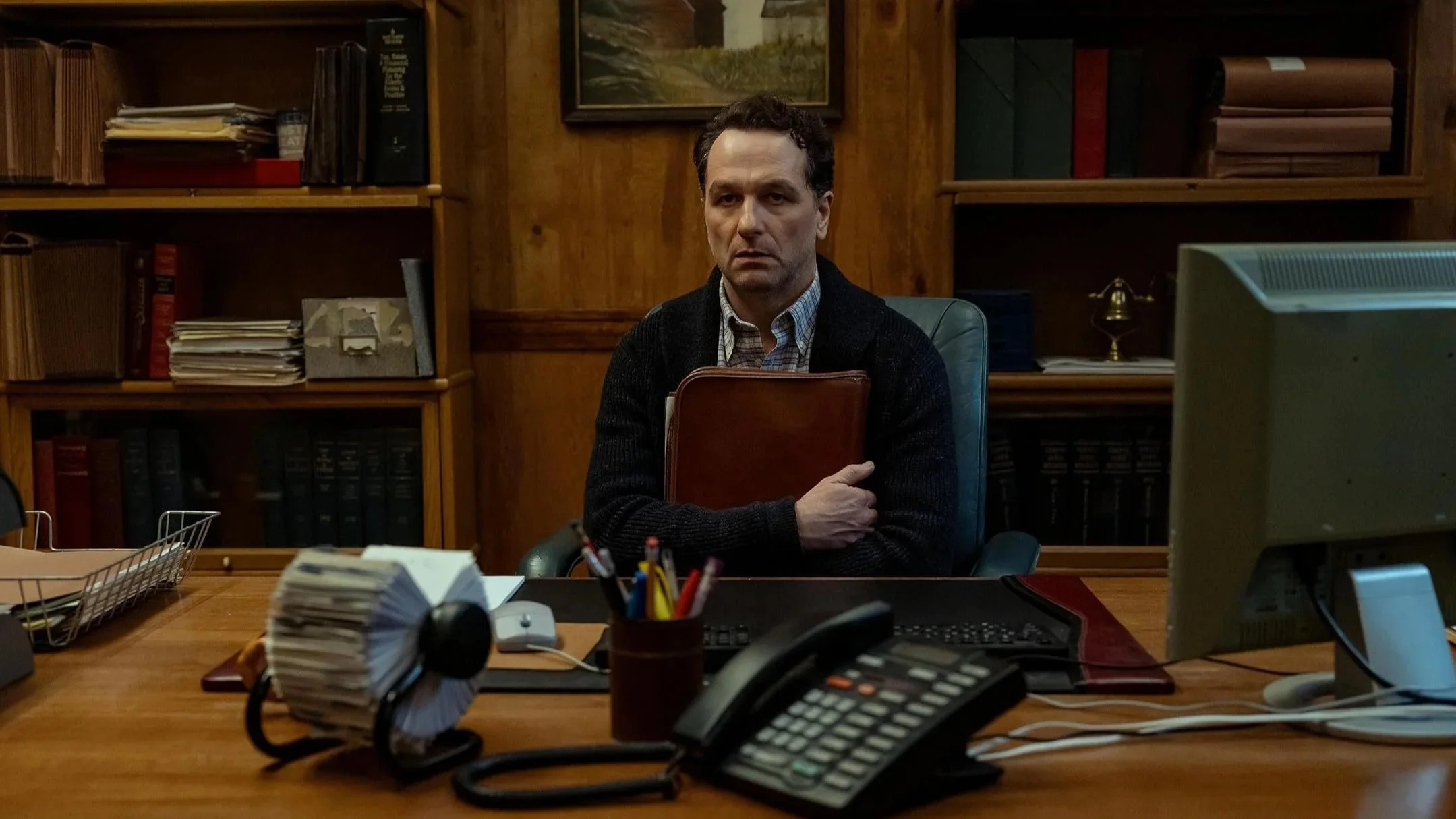
Widow’s Bay (Season 1) is a horror comedy set on the fictional New England island of Widow’s Bay. The show has similarities to Lost – it features people who are stuck on an island that appears to be a focus for supernatural forces beyond their control.
Matthew Rhys is well cast as the town’s mayor along Kate O’Flynn as his assistant. There is a charming quirkiness in the first four episodes where the comedy horror is played straight. The audience is unsure if the ‘dark forces’ are real or imagined. Then the story moves into more of a straight horror drama.
The production values, performances and writing has been excellent. The writer’s appear to have moved the dramatic climax forward, into episodes 5,6, 7, and 8, with episodes 9 and 10 settling back into something of an end of season lull.
There’s a lot going on in this season – a struggling mayor keeping the island’s tourist attractions open (very much like the mayor in Jaws), a visit to the island’s dark historical past, a Halloween meets It Follows chase episode, a variety of monsters and creepy apparitions, a drug experience episode, the theme of a father struggling to have a meaningful relationship with his son, and interactions of an eccentric group of unlikely buddies (a ‘band of heroes’) fighting for their friends and the island’s community.
It will be interesting to see where the writers take Widow’s Bay in Season 2. I can see it turning into a quirky soap opera meets Stranger Things for adults.